Business Analysis
GP Clinic Booking — Process Redesign
Concept case study: analysing a GP clinic's phone-only booking process, pinpointing where time and patients are lost, and specifying a self-service booking flow — from As-Is / To-Be process models to user stories, acceptance criteria and wireframes.
Context
This is a self-initiated practice case study built around a fictional mid-sized general practice in Darwin, created to apply the business analysis techniques I'm learning in my Master of IT. The clinic, figures and stakeholders are illustrative — the method is the point.
In the scenario, every appointment is booked by phone. Reception is overwhelmed at 8:30am, patients wait on hold, bookings are re-keyed by hand, and roughly one in ten appointments is a no-show because nobody sends a reminder.
Problem statement
Patients can't book outside opening hours and wait on hold during the morning peak, while reception spends most of the day on routine bookings instead of patients who need help. The clinic loses revenue to no-shows and staff time to manual double-handling.
Approach
- Stakeholder interviews (simulated): practice manager, two receptionists, a GP and three patients of different ages
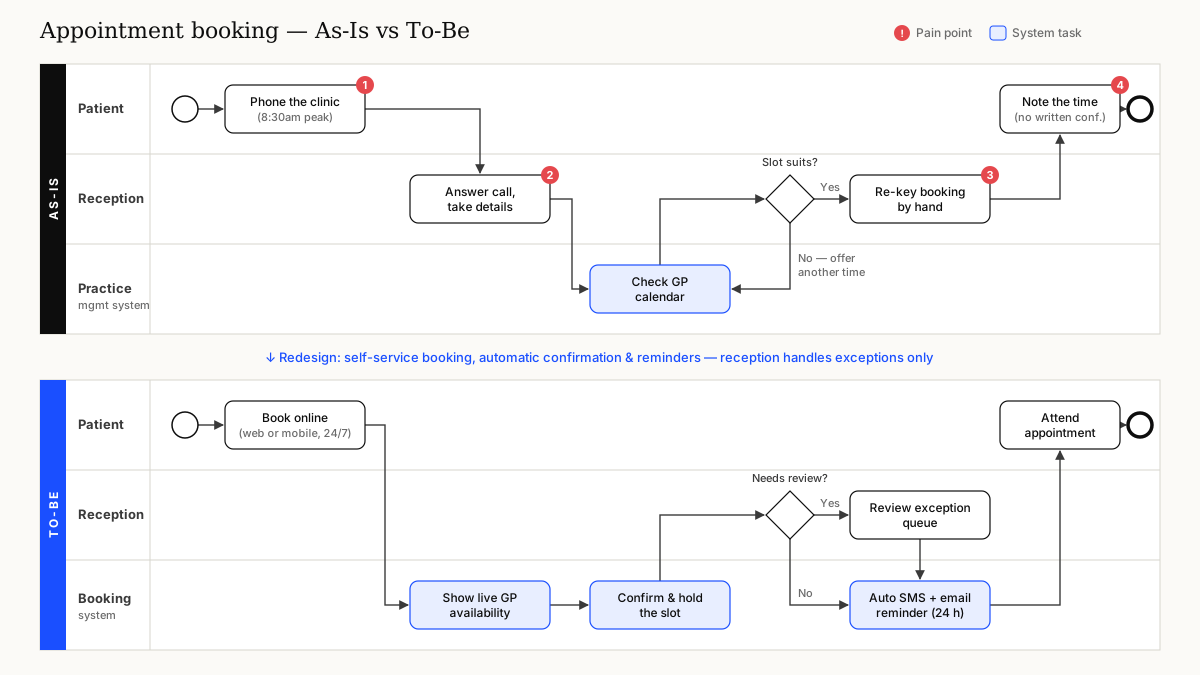
- Mapped the current process in a BPMN-style swimlane and tagged each pain point
- Designed the To-Be process so the system handles routine bookings and reception only sees exceptions
- Wrote user stories with acceptance criteria and grouped requirements with MoSCoW priorities
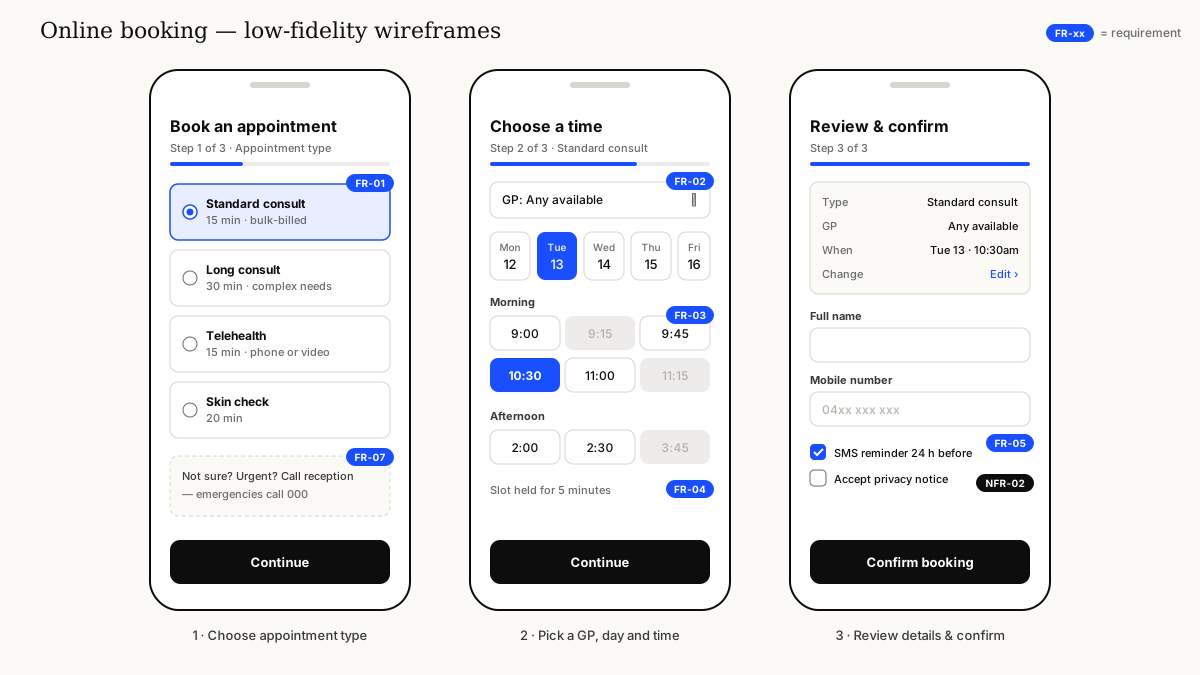
- Sketched low-fidelity wireframes and traced every screen element back to a requirement ID
As-Is vs To-Be process
- Pain point 1 — Single phone channel, peak demand at 8:30am
- Pain point 2 — Reception time consumed by routine calls
- Pain point 3 — Booking re-keyed into the practice system by hand (error-prone)
- Pain point 4 — No written confirmation or reminder, which drives no-shows
Key requirements
- FR-01 (Must) Patient can choose an appointment type with its duration shown
- FR-02 (Must) Patient can pick a specific GP or "any available"
- FR-03 (Must) System shows only genuinely free slots, synced with the practice calendar
- FR-04 (Must) Selected slot is held for 5 minutes to prevent double-booking
- FR-05 (Should) SMS reminder sent 24 hours before the appointment, with a cancel link
- FR-07 (Must) Urgent or unclear cases are directed to reception or 000, not booked online
- NFR-02 (Must) Personal and health information handled in line with the Australian Privacy Principles; consent captured
Example user story
As a working parent, I want to book a GP appointment online after hours, so that I don't have to call during work at 8:30am.
- Given I am on the booking page, when I select "Standard consult", then I only see slots of 15 minutes or longer
- Given a slot is shown as available, when I select it, then it is held for 5 minutes and no one else can book it
- Given I confirm a booking, then I receive an SMS confirmation within one minute
Wireframes
Success measures
- Share of bookings made online (target: 40% within 3 months)
- No-show rate (target: down from ~10% to under 6%)
- Average call wait time during the 8:30–9:30am peak
- Reception hours spent on routine bookings per week
What I learned
Separating the "happy path" from exceptions was the key design decision: it lets automation handle volume while keeping humans in charge of the cases that need judgement — which is also what made the clinical staff comfortable with the change.